
Helping more children get sponsored
Web experience . Lead Designer . Wordpress (CMS) . Figma
Client
ERDO (Emergency Relief Development Overseas)
Sumary
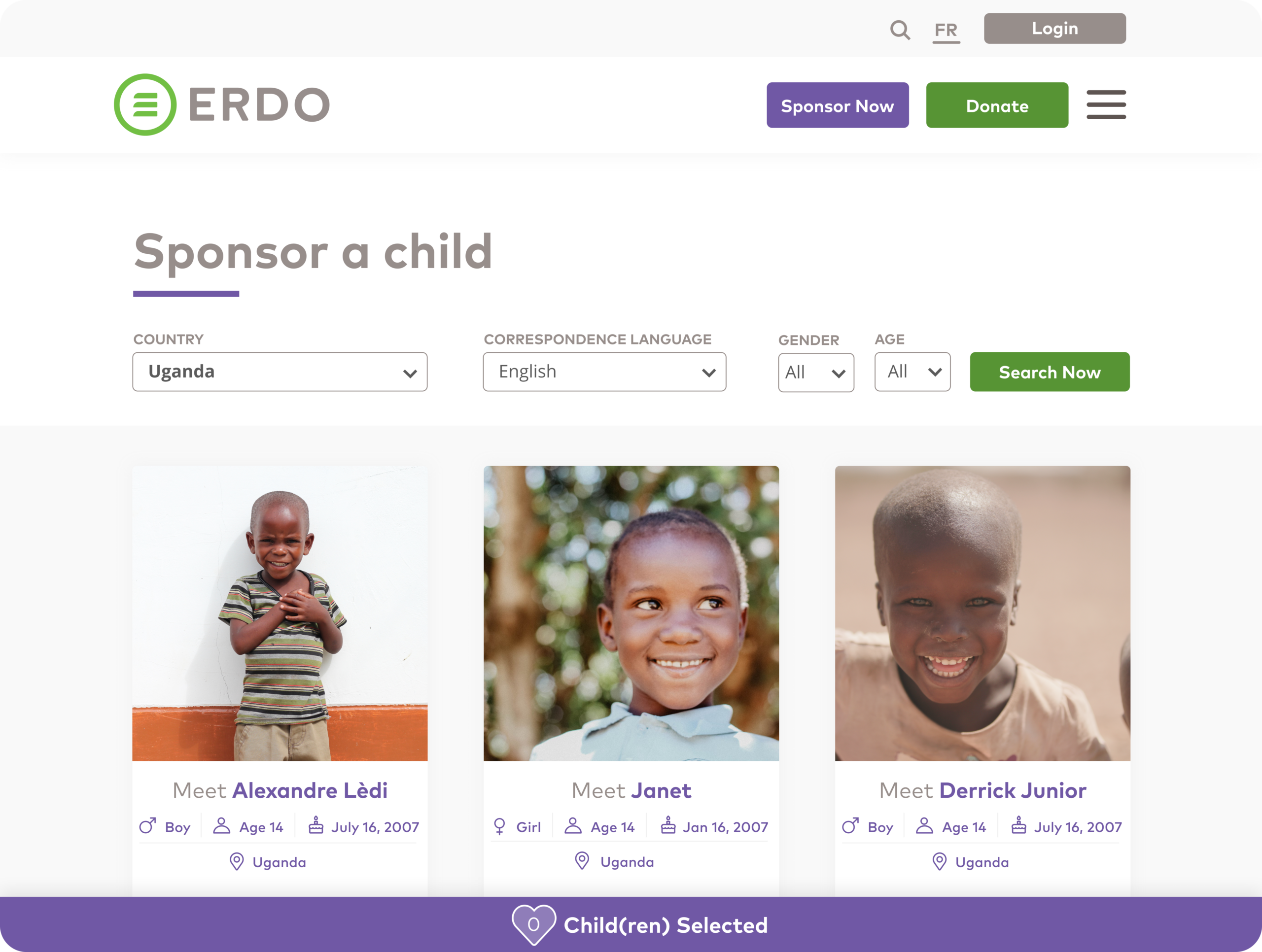
Improving the child sponsorship experience and checkout flow
Results
130+ children sponsored in the first few months after launch
Client
ERDO (Emergency Relief Development Overseas)
Sumary
Improving the child sponsorship experience and checkout flow
Results
130+ children sponsored in the first few months after launch
Overview
ERDO provides critical support to children in crisis through global aid efforts and a child sponsorship program. The existing sponsorship experience created friction for donors and lacked clarity at key steps in the journey.
Collaborating with the PM, developers, and business analysts, I helped redesign the end-to-end sponsorship experience—improving clarity, reducing friction, and strengthening storytelling throughout.
My Role
- Contributed to end-to-end redesign (journey + checkout)
- Designed most screens for the sponsorship experience and checkout flow
- Created user flows and journey mapping to guide implementation
- Aligned with PM, developers, and BAs to align on requirements and feasibility
Key Challenges
Identified through client discovery sessions
1. Cluttered Navigation
Donors struggled to find a clear path to sponsor a child due to an overcomplicated submenu structure.
2. Lack of Progress Feedback
Donors had no visibility into where they were in the process, leading to confusion and drop-offs.
3. Backend Integration Limitations
The existing system required donors to call to manage sponsorships, creating internal challenges and limits to manage donor data efficiently.
Before the redesign
Auditing the existing experience revealed friction points and opportunities for improvement:
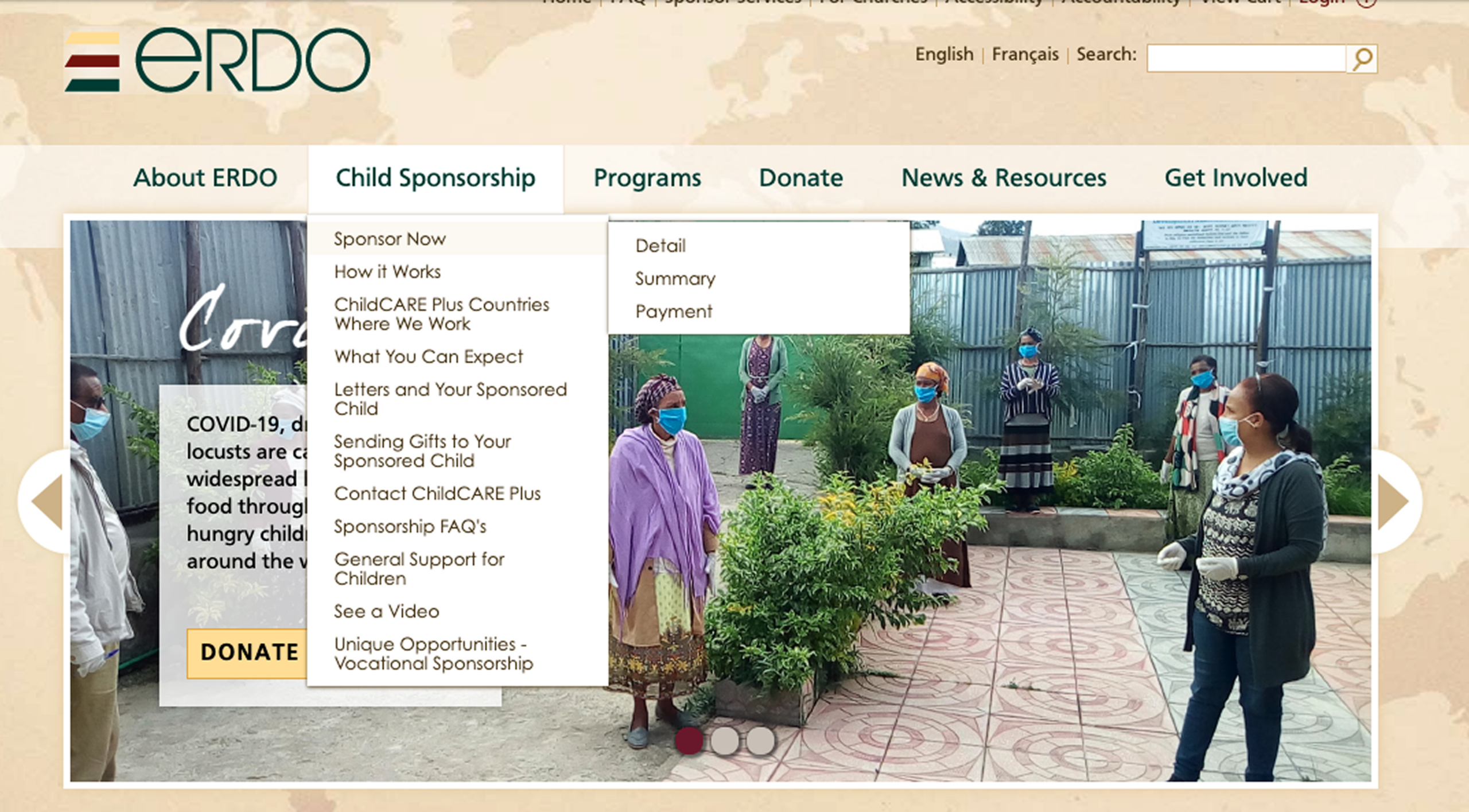
Step 1: Entry point & Navigation
Pain point
Long submenus under “Child Sponsorship” made it difficult for donors to find clear path forward.
Opportunity
Simplify navigation and create a clear, dedicated entry point for child sponsorship.
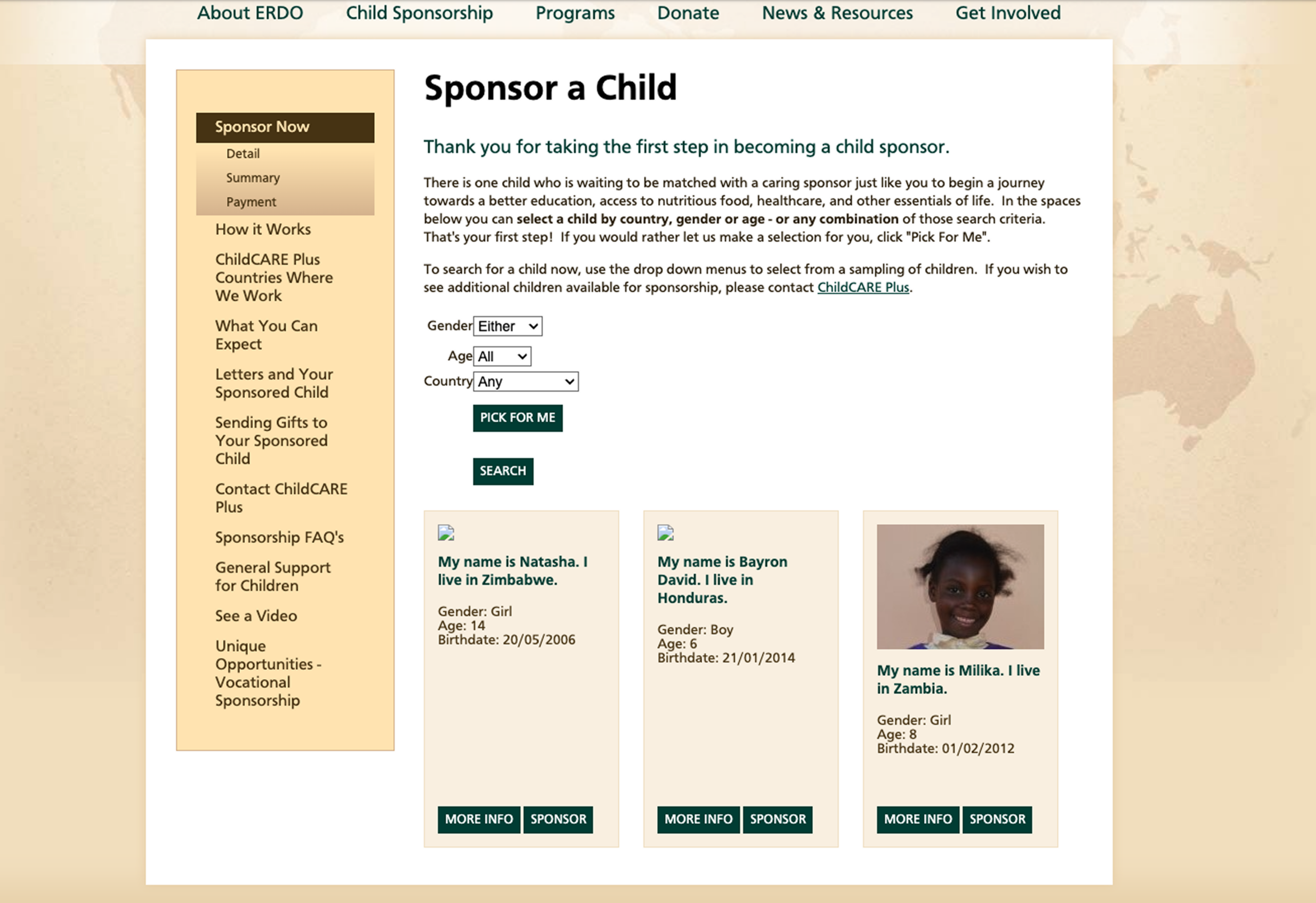
Step 2: Sponsor a child section
Pain point
Limited context makes it hard for donors to build an emotional connection.
Opportunity
Introduce an engaging layout that highlights the child’s story and guides donors toward action.
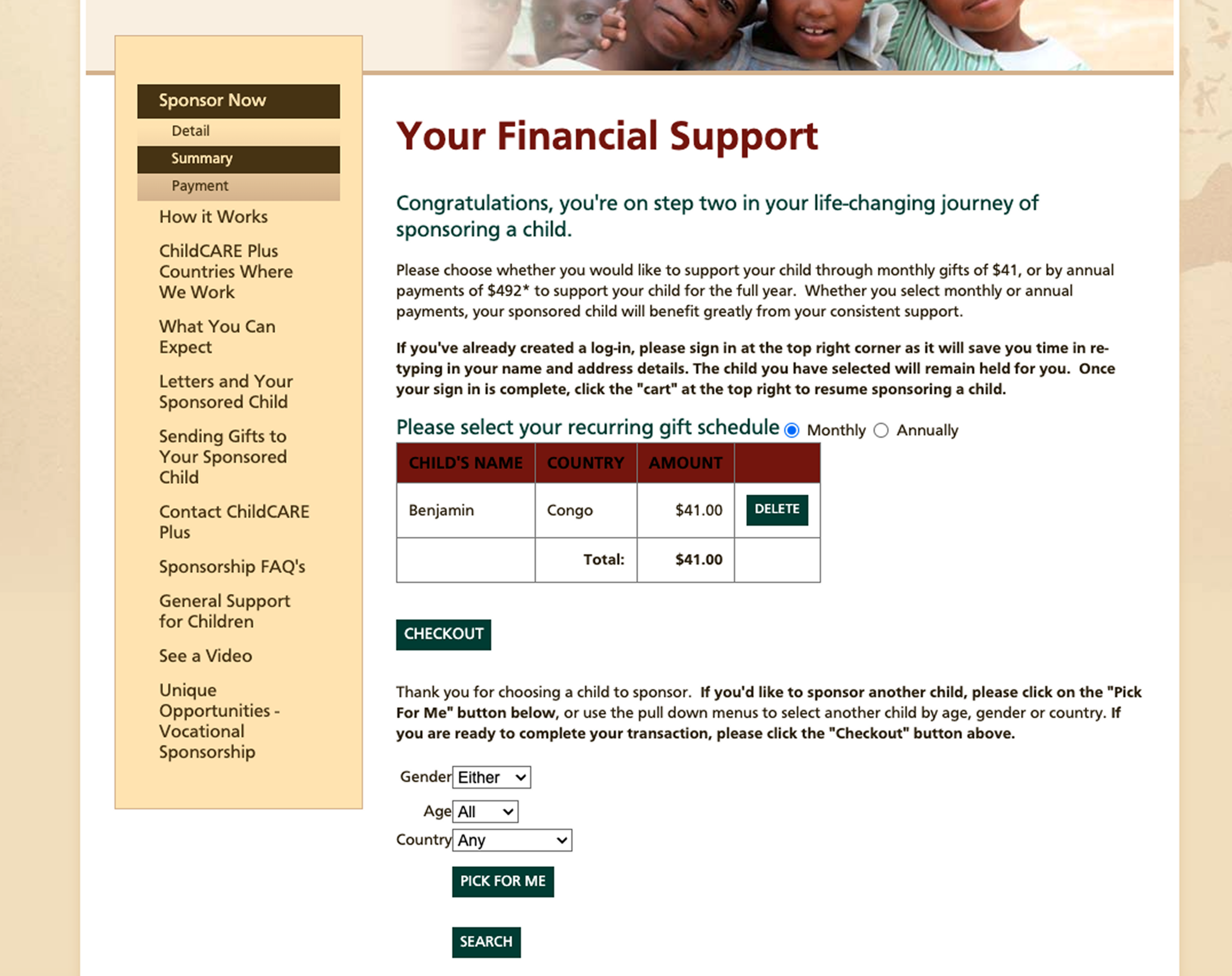
Step 3: Checkout & payment
Pain point
Disorganized page layouts and unclear steps increased confusion and drop-offs.
Opportunity
Clarify the step-by-step flow and streamline the layout to reduce friction through checkout.
Addressing Backend Constraints
Behind the scenes, the exisiting system made donor management and reporting harder than it needed to be. Integrating Raiser’s Edge NXT (RENXT) helped support automation and improve data tracking—and influenced how we designed the sponsorship flow and backend handoff.
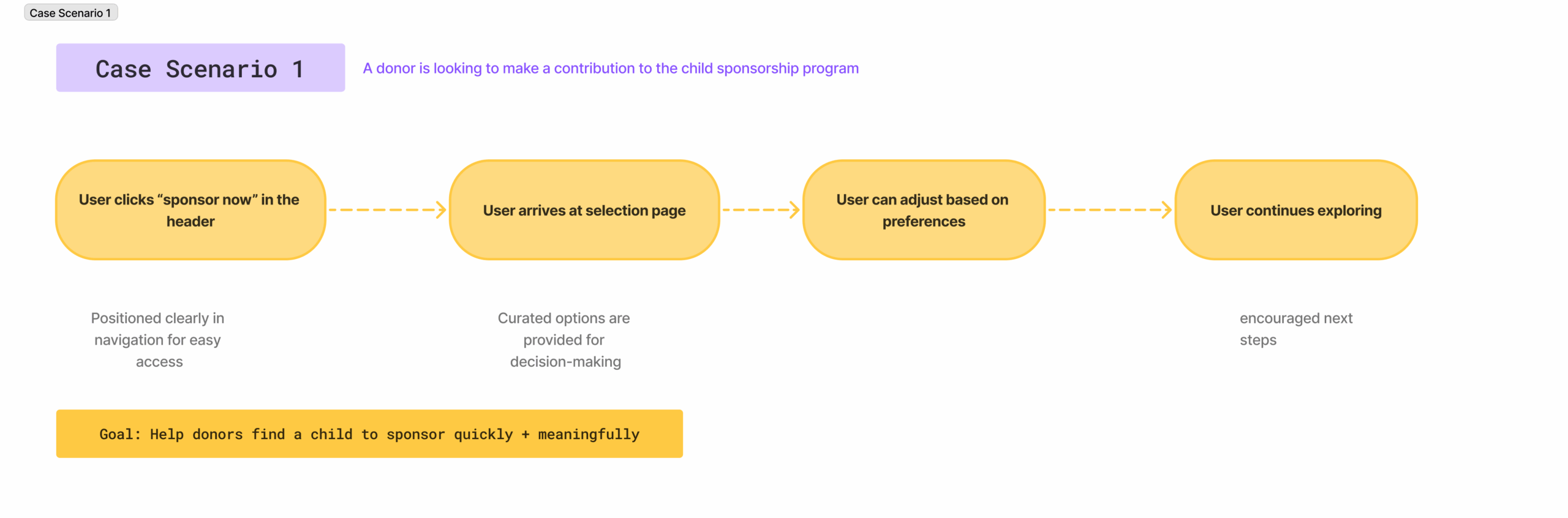
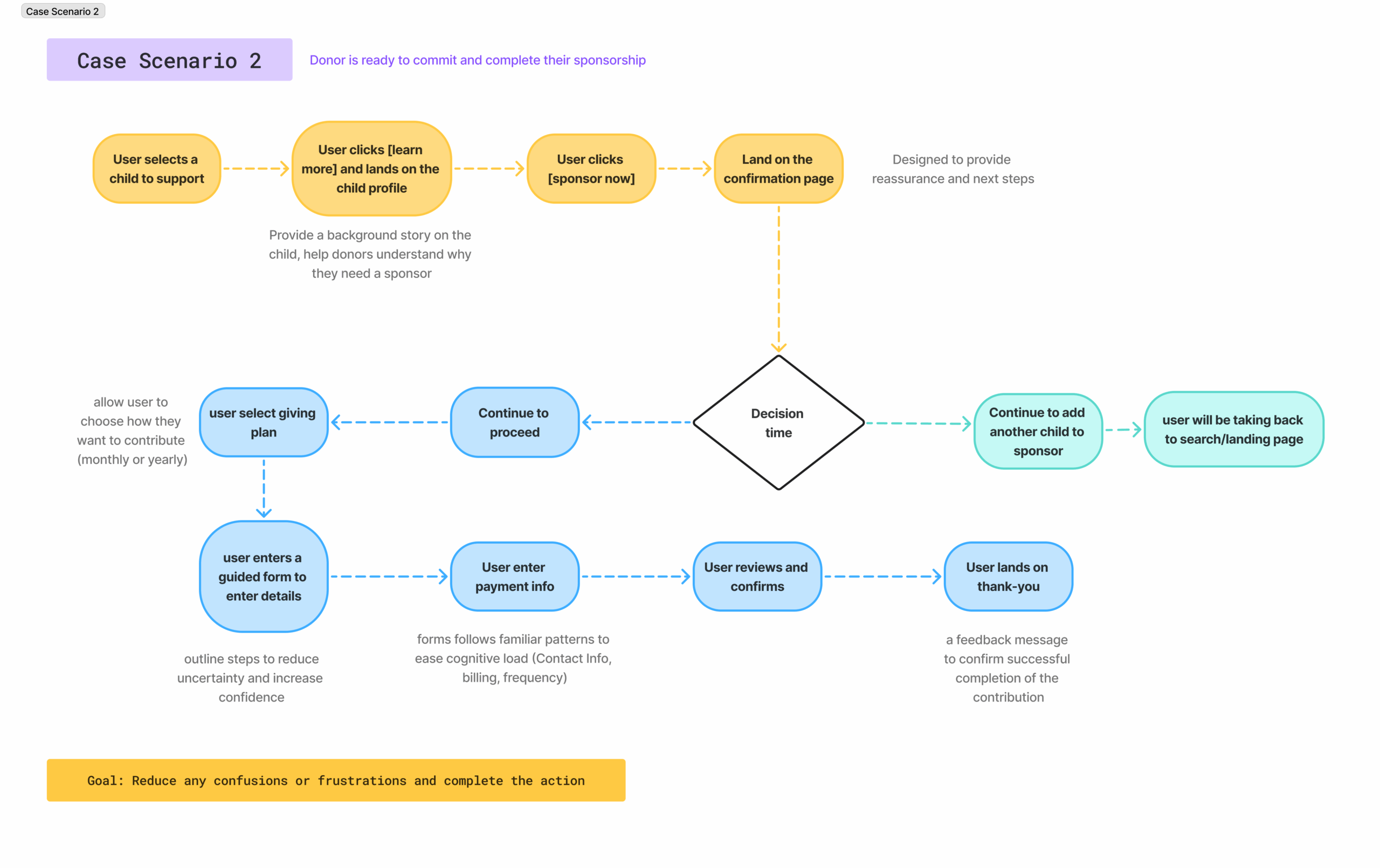
Rethinking the Journey
Why it mattered:
- Highlighted friction points and gaps in the experience
- Informed a clearer, more engaging donor flow
- Balanced donor needs with technical feasibility and business requirements
Bringing Vision to Life
Key design decisions included:
- A focused navigation path that prioritized child sponsorship
- Context-rich layouts that highlight each child’s story and impact
- Clear progress indicators to reduce uncertainty and drop-offs
- A streamlined checkout flow that aligned with backend capabilities
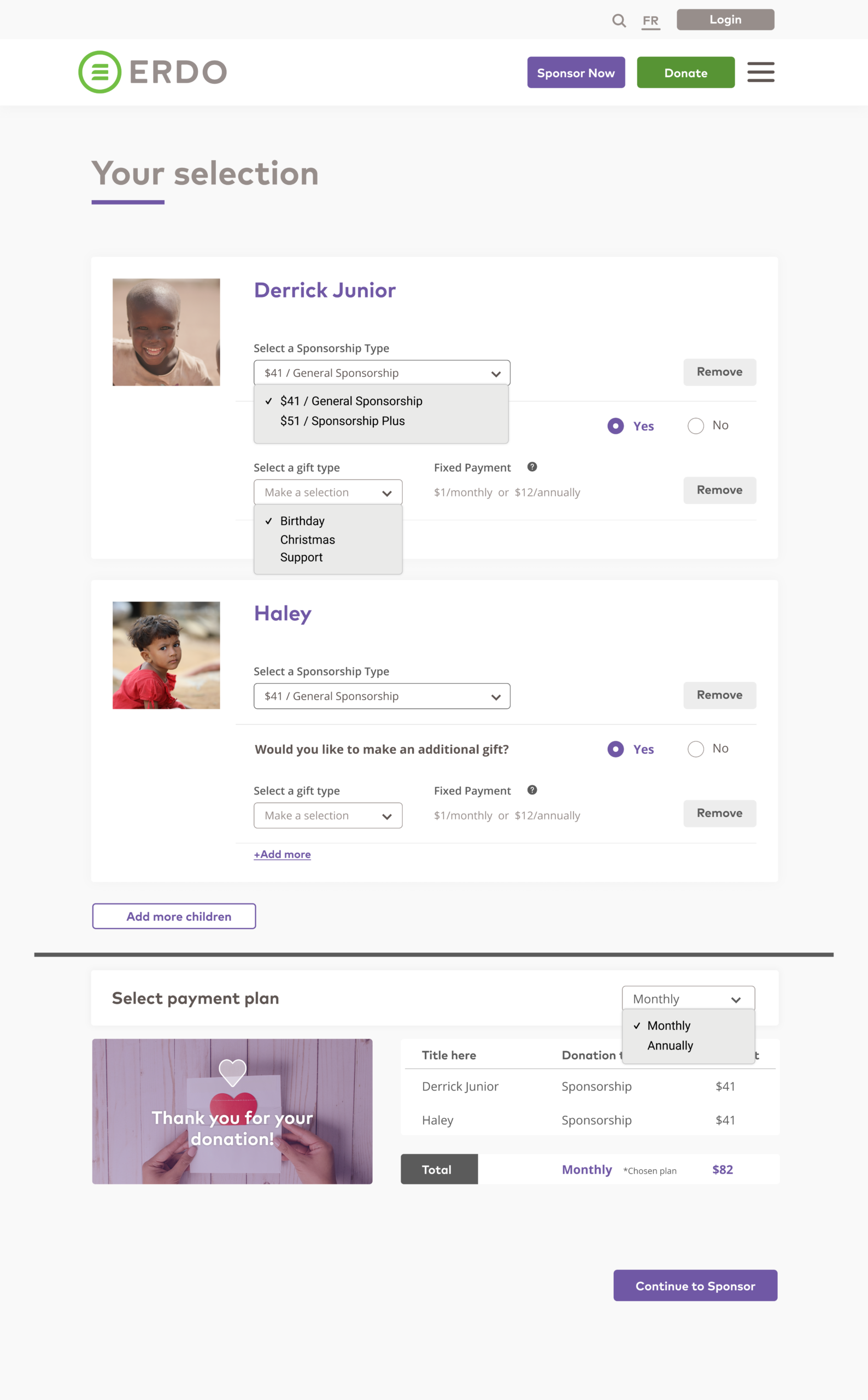
Cart Page
A clear sponsorship summary that helps donor review, adjust, and proceed with confidence.
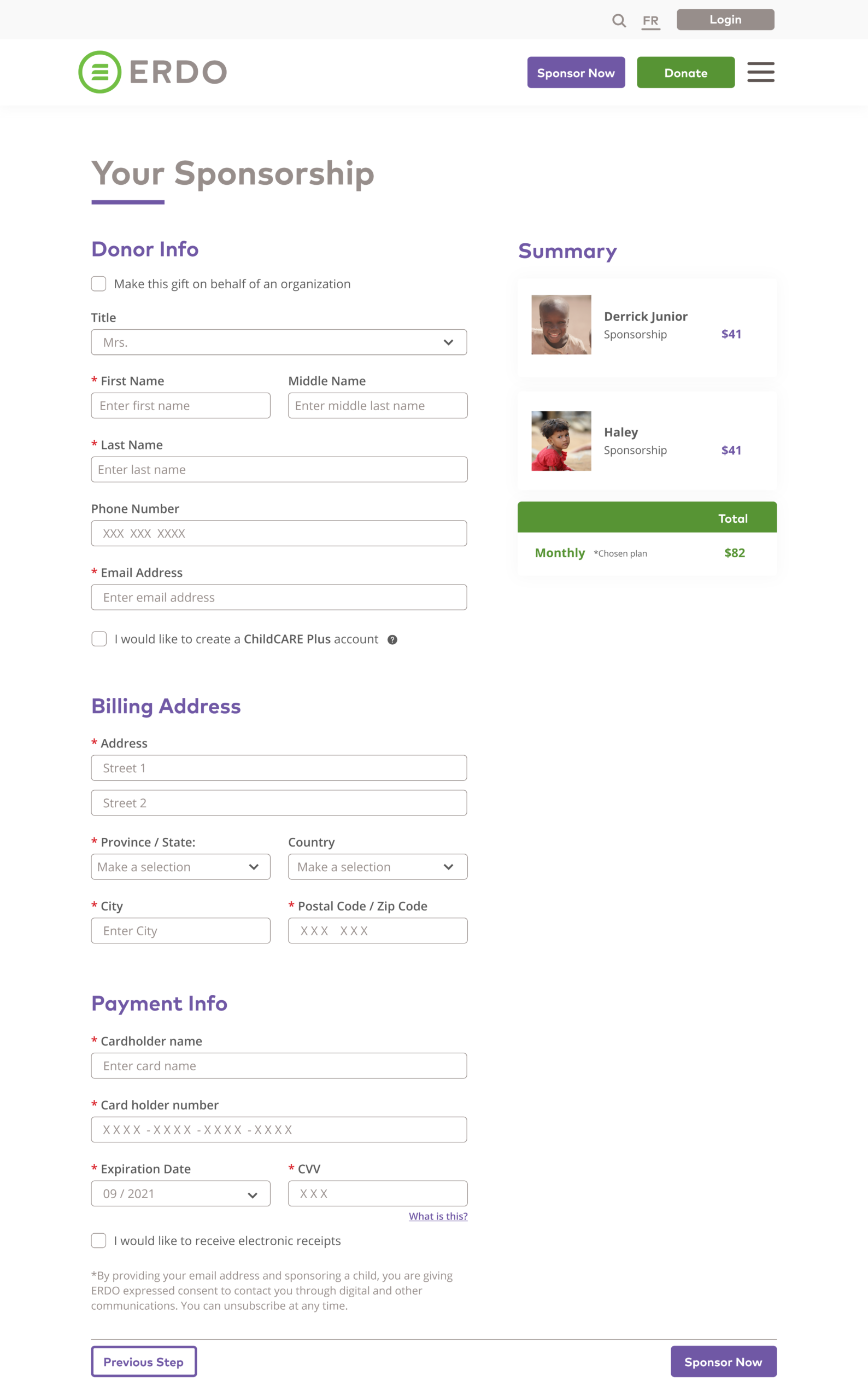
Checkout
Structured, guided forms that reduce cognitive load while capturing required backend data.
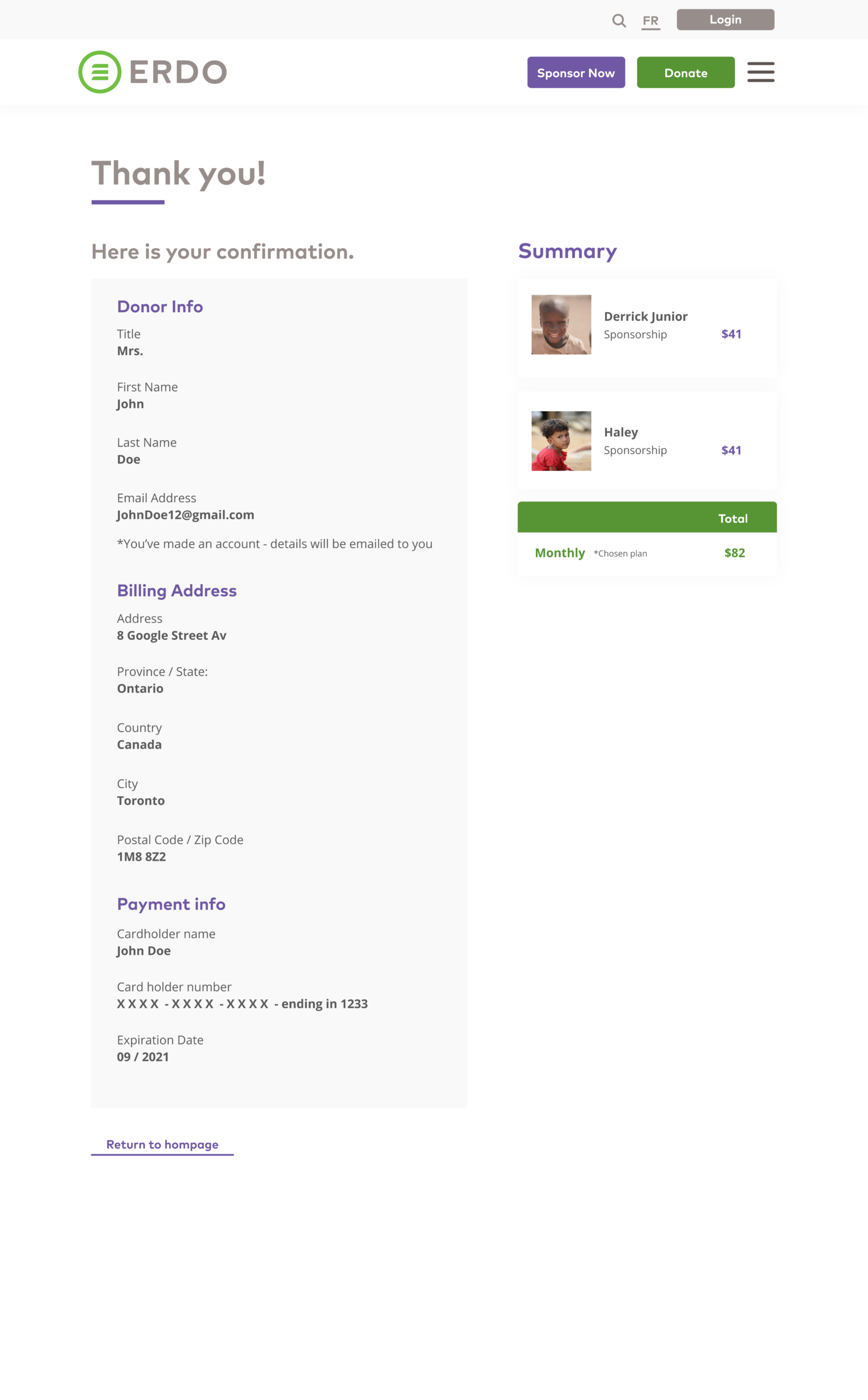
Confirmation
A clear confirmation that reinforces impact and provides next steps, building donor trust.
Impact of design
Since launch, 230+ children have been sponsored—with continued growth over time. The redesigned experience reduced friction across the sponsorship journey, improved clarity at checkout, and supported smoother donor data management for the internal team.
Lessons learned
- Collaboration drives better outcomes Working closely with developers, PMs, and analysts highlighted how design intersects with every aspect of the product. Early communication helped save time and build trust.
- Designing with emotion matters In nonprofit experiences, storytelling and empathetic visuals help donors connect and act.
- Transparency builds trust Honest messaging about where donations go increased donor confidence and engagement.
- Tech fluency strengthens design Familiarity with backend systems and constraints allowed me to design solutions that were both feasible and impactful.